

Why Protect Your Lenses?
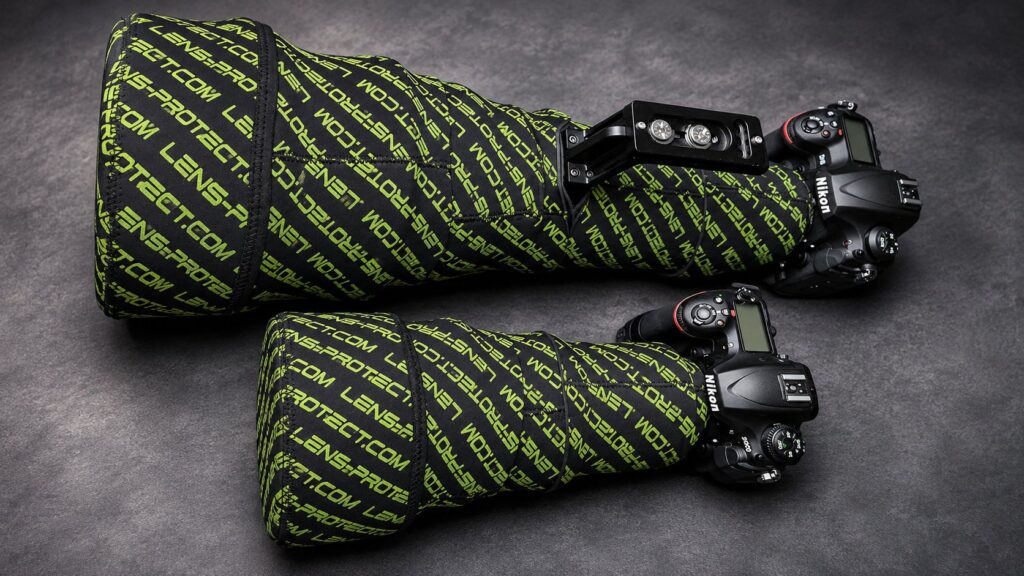
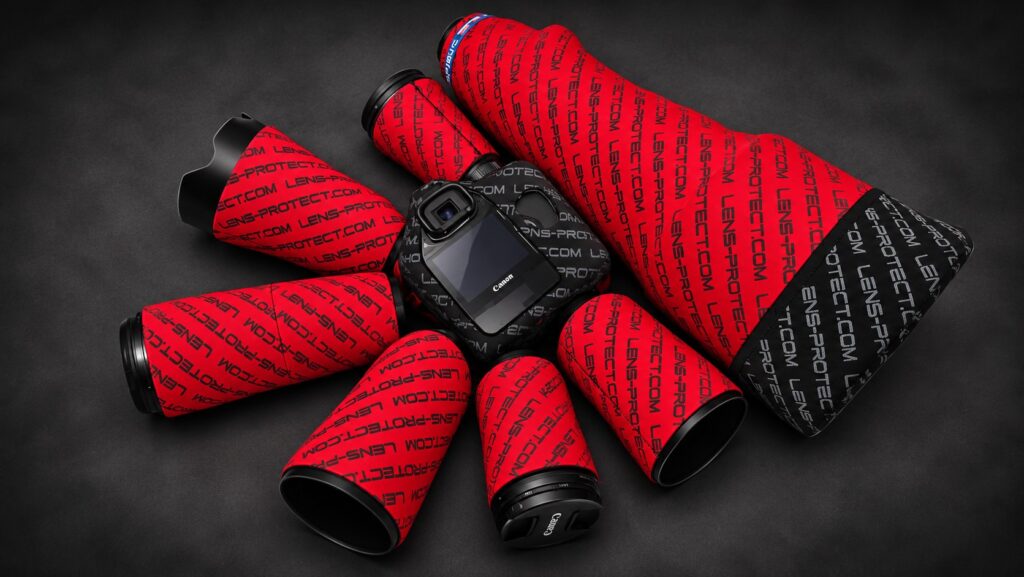
Every photographic lens contains sensitive mechanical components. The focus, zoom and, where applicable, aperture rings have small moving gaps through which dust, sand, salt, moisture and other contaminants can enter. Over time, these can lead to reduced functionality, increased wear or damage to the lens.
The main purpose of Lens-Protect is to protect these sensitive areas and help prevent dirt from entering the lens mechanism. This helps keep your photographic equipment in good condition, even when used in demanding environments.
Why Isn’t a Warranty Enough?
Many photographers assume that their equipment is covered by a warranty and therefore does not need any additional protection. This can be a costly mistake. Imagine setting off on a month-long photographic expedition to the other side of the world, only to discover that your lens has been damaged on the second day. Even if your warranty is still valid, it will be of little help at that moment. In most cases, you will only be able to arrange a repair or warranty claim after returning home. By then, your entire trip, including the money you have invested in it, may effectively be ruined.
This is exactly why the idea behind Lens-Protect came about. Photographic equipment often represents an investment worth thousands or even tens of thousands of euros. Protecting it is particularly important when travelling, on expeditions and when photographing in demanding conditions far from civilisation, where you cannot simply have your equipment repaired or replaced.
An equipment warranty may cover repairs, but it cannot protect you from losing the opportunity to take photographs. The right protection, on the other hand, can save your entire photographic expedition.
Construction of Protective Covers
Construction of Protective Covers
We manufacture Lens-Protect covers in two different designs, depending on the type and construction of the lens.
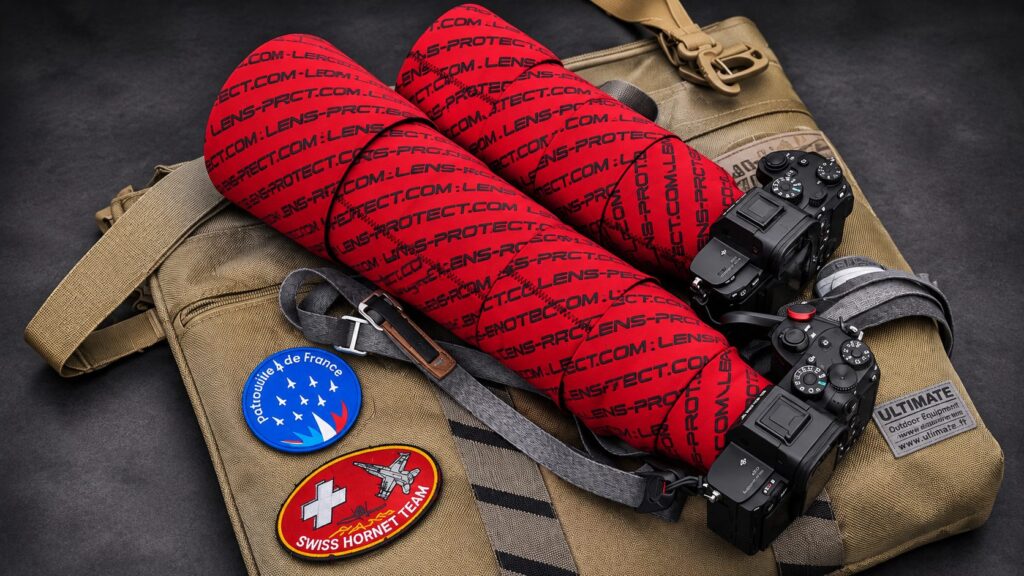
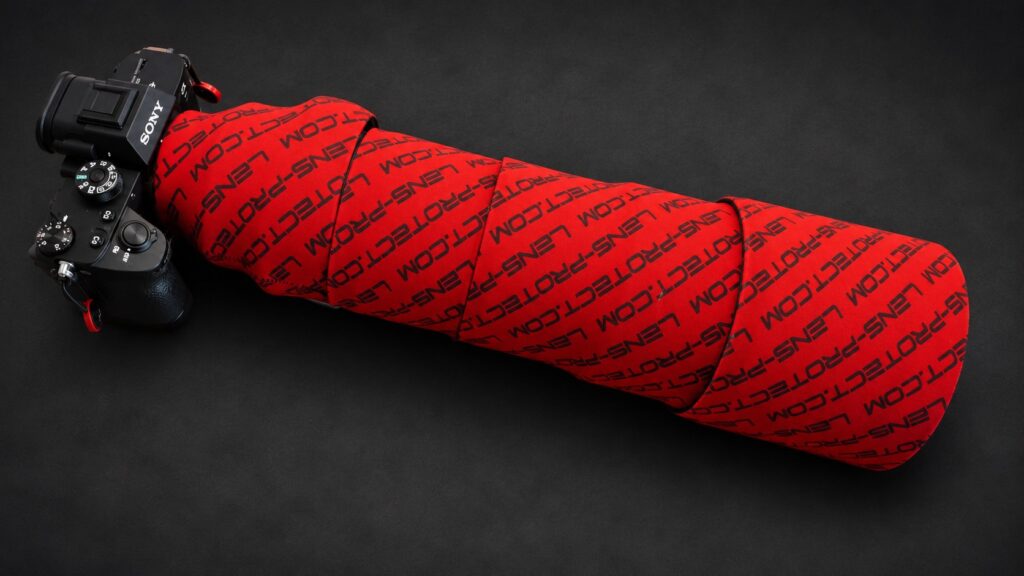
For prime lenses, especially shorter focal-length models, the cover is usually made as one compact piece. It provides continuous protection for the lens body and its sensitive components.
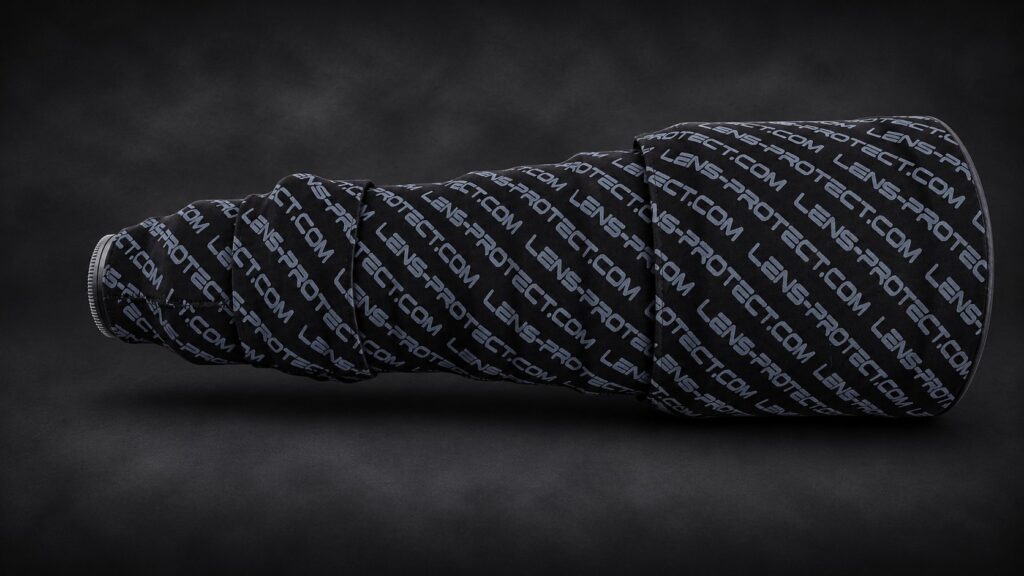
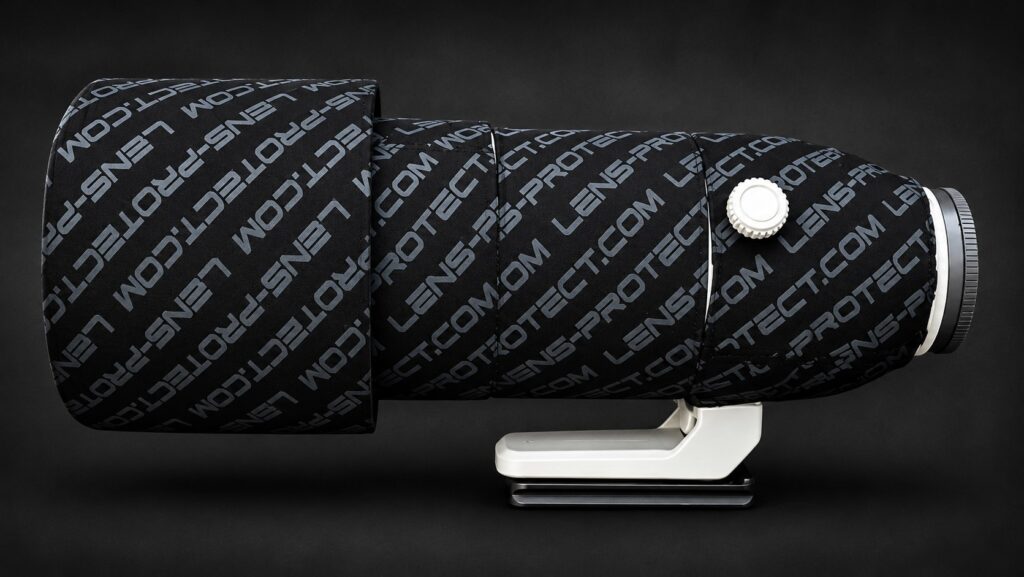
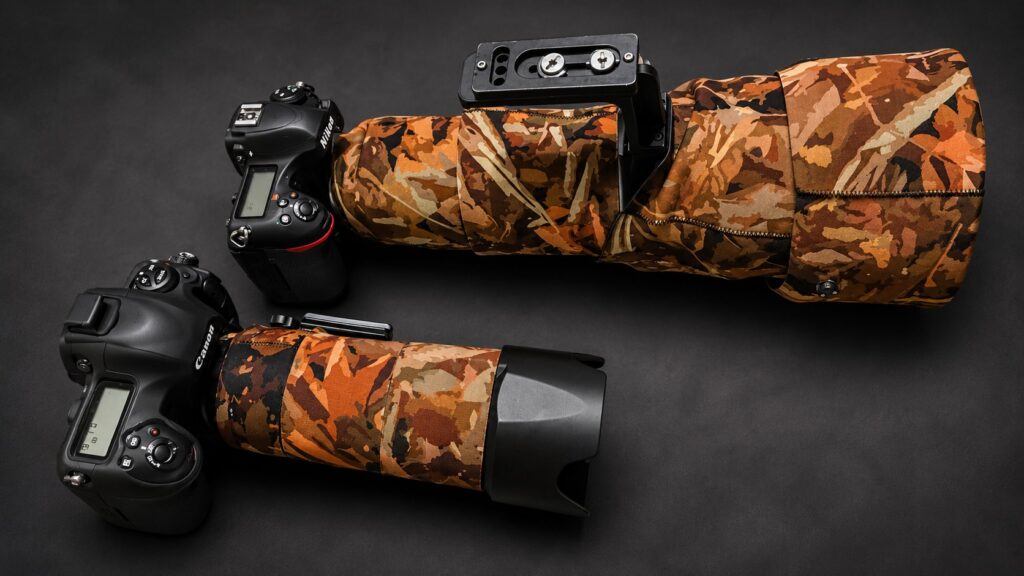
For longer telephoto lenses, the cover is made from several separate sections. This design allows full access to the focus ring and comfortable manual focusing without having to remove the cover or restrict the use of the lens.
Both designs are intended to provide maximum protection for valuable photographic equipment while preserving its full functionality and ease of use.
Protection for Zoom Lenses
Zoom lenses usually have two separate control rings – one for focusing and the other for changing the focal length (zooming). The protective cover must therefore accommodate their construction and allow both rings to be operated independently without restricting the functionality of the lens.
For shorter zoom lenses, the protective cover usually consists of two separate sections. One protects the area around the focus ring, while the other covers the zoom ring. The two sections operate independently, allowing comfortable control of the lens while protecting its sensitive components.
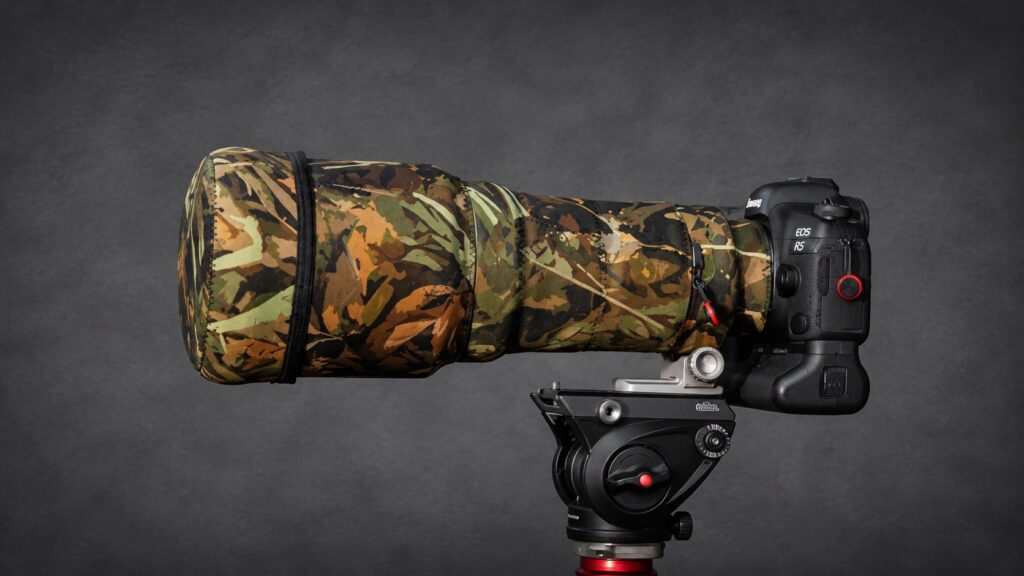
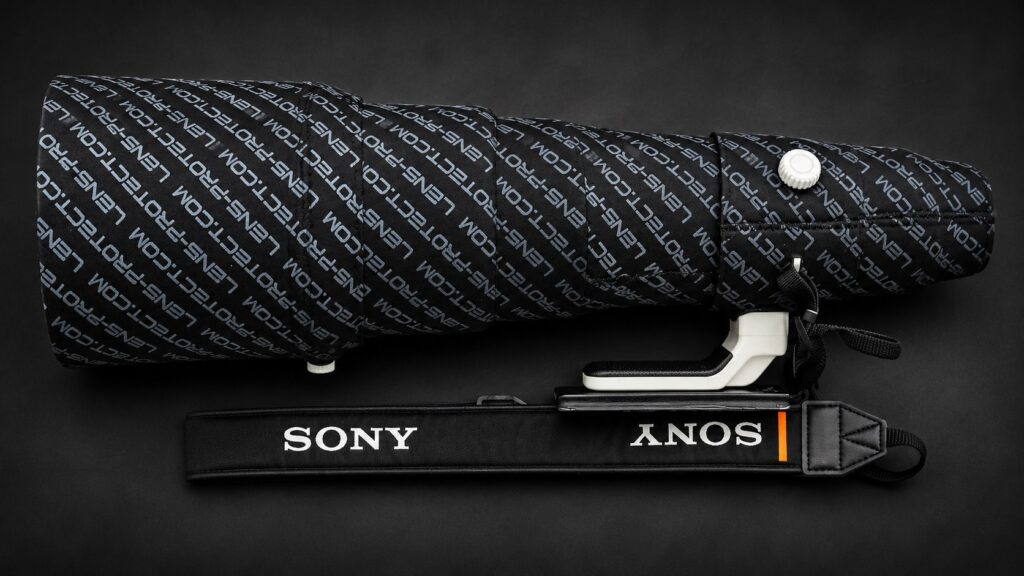
For longer telephoto zoom lenses, typically those with a focal range starting at around 200 mm or more, the cover is designed in three sections. One section protects the focus ring, the second protects the zoom ring, and the third closes off the rear part of the lens. This is particularly important for lenses with a tripod foot or collar. The rear section must be properly closed and fit closely against the lens body to help prevent dirt from entering the bayonet mount and subsequently the camera.
The exact number of sections and their design are always adapted to the construction and specific features of each lens. Our aim is to provide the best possible protection while maintaining full functionality, comfortable operation and independent access to all important controls.
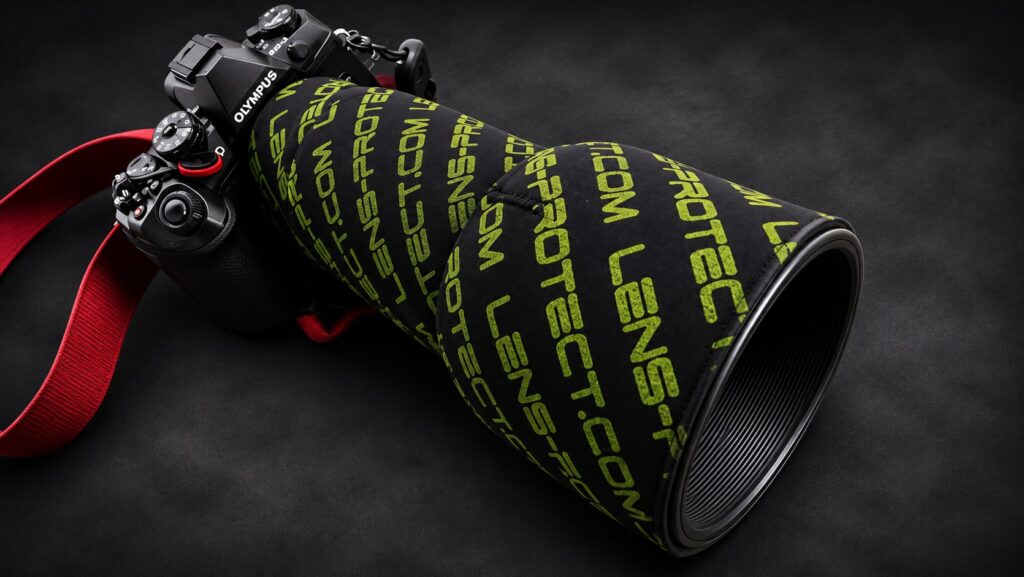
What about the lens hood? Protecting the lens hood is not an essential part of lens protection. A lens hood is generally a plastic accessory and is not as important to protect as the lens body and its mechanical components. For lenses whose hoods do not have a specific shaped cut-out, it is possible to extend the protective cover to include the hood. However, this is mainly intended to create a consistent appearance rather than provide an essential protective function.


Choose Protection for Your Lens
Find your lens by brand and model. For each product, you will see the price of the protective cover and can add it directly to your order.
Material and colour